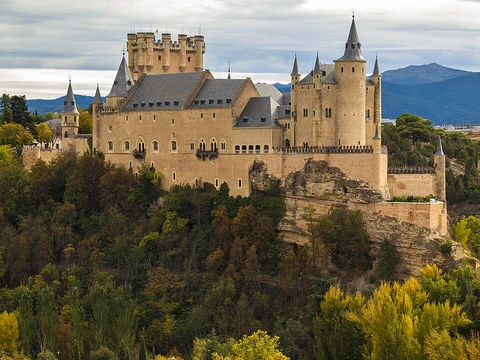
Matsumoto Castle
One of Japan's premier historic castles with original wooden interiors.

Matsumoto Castle, originally known as Fukashi Castle, is a historic Japanese castle located in the city of Matsumoto, Nagano Prefecture. It is one of Japan's premier historic castles, alongside Himeji and Kumamoto, and served as the seat of Matsumoto Domain under the Edo Period Tokugawa shogunate. The keep, completed in the late sixteenth century, retains its original wooden interiors and external stonework and is listed as a National Treasure of Japan, one of only twelve surviving tenshu in the country.
- type
- Flatland castle (hirajiro)
- location
- Matsumoto, Nagano Prefecture, Japan
- original_name
- Fukashi Castle
- period
- Sengoku period to Edo period
Lore & Background
Takeda Shingen appointed his retainer Baba Nobuharu as castellan, and the castle served as the Takeda field headquarters for their conquest of the Matsumoto Basin and as a redoubt in conflicts with the Uesugi clan to the north.
Reader's Guide
Matsumoto Castle is significant as one of Japan's few surviving original castles, with its keep and four other structures designated as National Treasures. It is a flatland castle, built on a plain rather than a hilltop, and its complete defenses included an extensive system of inter-connecting walls, moats, and gatehouses.
Did You Know?
- Matsumoto Castle is one of only twelve surviving tenshu (castle keeps) in Japan.
Common Misconceptions (Editorial)
Some people mistakenly believe Matsumoto Castle is a mountain fortress or hilltop castle, but it is classified as a flatland castle (hirajiro). Others may assume that its original name has always been Matsumoto Castle, when in fact it was originally known as Fukashi Castle. Additionally, a common misconception is that many original Japanese castle keeps survive, but Matsumoto is one of only twelve surviving tenshu in the country.
Why It Matters (Editorial)
Matsumoto Castle endures as a rare physical link to Japan’s Sengoku and Edo periods, its original wooden interiors and stonework offering an authentic glimpse into feudal military architecture. Beyond its historical rarity, it stands as a symbol of regional identity and resilience, having weathered centuries of conflict and modernization to remain a treasured landmark in Nagano Prefecture.
Frequently Asked Questions
Who is Matsumoto Castle?
Matsumoto Castle is a flatland-style (hirajiro) Japanese fortress located in Matsumoto city, Nagano Prefecture. Originally named Fukashi Castle, it operated as the administrative seat of Matsumoto Domain throughout the Edo Period under the Tokugawa shogunate.
What makes Matsumoto Castle stand out among other castles?
Its main keep, completed in the late sixteenth century, still retains its original timber framework and exterior stonework, making it one of only twelve surviving original tenshu in Japan. It is routinely grouped with Himeji and Kumamoto as one of the country's premier historic fortress sites.
Why is Matsumoto Castle important to Japanese history?
It functioned as the seat of power for the Matsumoto Domain during the entire Tokugawa era, placing it at the center of Edo Period regional governance. Its survival with original construction elements makes it an irreplaceable physical record of late-sixteenth-century Japanese castle architecture.
What is Matsumoto Castle's original name?
Before adopting its current name, the fortress was known as Fukashi Castle. The later name reflects the city it anchors, while the Sengoku-era designation of Fukashi still appears in historical records of the site.
More in Castles 1-22
Spotted an error? Know more?
This is a living reference — every entry is fact-audited, and reader corrections feed straight into our audit queue. Suggest an edit · See this site's audit record