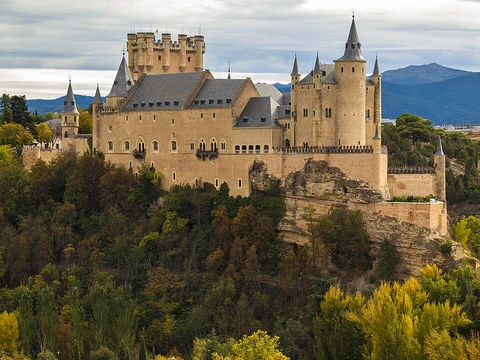
Bodiam Castle
14th-century moated castle built for defence and display.

via Wikipedia: Bodiam Castle · see source
Bodiam Castle is a 14th-century moated castle near Robertsbridge in East Sussex, England. It was built in 1385 by Sir Edward Dalyngrigge with the permission of Richard II, ostensibly to defend the area against French invasion during the Hundred Years' War. Of quadrangular plan, Bodiam Castle has no keep, having its various chambers built around the outer defensive walls and inner courts. Its corners and entrance are marked by towers, and topped by battlements. Its structure, details and situation in an artificial watery landscape indicate that display was an important aspect of the castle's design as well as defence. It was the home of the Dalyngrigge family and the centre of the manor of Bodiam.
- built
- 1385
- builder
- Sir Edward Dalyngrigge
- location
- near Robertsbridge, East Sussex, England
- type
- moated castle
- architectural_style
- quadrangular plan with towers and battlements
- current_owner
- National Trust (since 1925)
- designation
- Grade I listed building and Scheduled Monument
Lore & Background
Edward Dalyngrigge was a younger son and thus deprived of his father's estates through the practice of primogeniture, hence he had to make his own fortunes. By 1378, he owned the manor of Bodiam by marrying into a land-owning family. From 1379 to 1388, Dalyngrigge was a Knight of the Shire for Sussex and one of the most influential people in the county. He left for France in 1367 and journeyed with Lionel, Duke of Clarence, son of Edward III. After fighting under Richard Fitzalan, 3rd Earl of Arundel, Dalyngrigge joined the company of Sir Robert Knolles, a notorious commander who was reputed to have made 100,000 gold crowns as a mercenary from pillage and plunder. It was as a member of the Free Companies that Dalyngrigge raised the money to build Bodiam Castle; he returned to England in 1377. In 1385, a fleet of 1,200 ships – variously cogs, barges, and galleys – gathered across the English Channel at Sluys, Flanders; the population of southern England was in a state of panic. Later in the year, Edward Dalyngrigge was granted a licence to fortify his manor house. Dalyngrigge's licence from Richard II permitted him to refortify his existing manor house, but instead he chose a fresh site to build a castle on. Construction was completed in one phase, and most of the castle is in the same architectural style. Archaeologist David Thackray has deduced from this that Bodiam Castle was built quickly, probably because of the threat from the French. Dalyngrigge was Captain of the port of Brest in France from 1386 to 1387, and as a result was probably absent for the first years of the castle's construction. It is not recorded when Bodiam Castle was completed, but Thackray suggests that it was before 1392; Dalyngrigge did not have long to spend in the completed castle, as he was dead by 1395. Possession of Bodiam Castle passed through several generations of Dalyngrigges, until their line became extinct and the castle passed by marriage to the Lewknor family. During the Wars of the Roses, Sir Thomas Lewknor supported the House of Lancaster, and when Richard III of the House of York became king in 1483, a force was despatched to besiege Bodiam Castle. It is unrecorded whether the siege went ahead, but it is thought that Bodiam surrendered without much resistance. The castle was confiscated, but returned to the Lewknors when Henry VII of the House of Tudor became king in 1485. Descendants of the Lewknors owned the castle until at least the 16th century. By the start of the English Civil War in 1641, Bodiam Castle was in the possession of John Tufton, 2nd Earl of Thanet. He supported the Royalist cause, and sold the castle to help pay fines levied against him by Parliament. The castle was subsequently dismantled, and was left as a picturesque ruin until its purchase by John Fuller in 1829. Under his auspices, the castle was partially restored before being sold to George Cubitt, 1st Baron Ashcombe, and later to Lord Curzon, both of whom undertook further restoration work. The castle has been owned by the National Trust since 1925, donated by Lord Curzon on his death, and is open to the public.
Reader's Guide
Bodiam Castle is a 14th-century moated castle near Robertsbridge in East Sussex, England. Built in 1385 by Sir Edward Dalyngrigge with the permission of Richard II, it was ostensibly intended to defend the area against French invasion during the Hundred Years' War. Of quadrangular plan with no keep, its chambers are built around outer defensive walls and inner courts, with towers and battlements marking its corners and entrance. The castle's structure, details, and artificial watery landscape indicate that display was as important as defence. It served as the home of the Dalyngrigge family and the centre of the manor of Bodiam. The castle is protected as a Grade I listed building and Scheduled Monument. It has been owned by the National Trust since 1925, donated by Lord Curzon on his death, and is open to the public.
Did You Know?
- Bodiam Castle has no keep; its chambers are built around the outer defensive walls and inner courts.
- Sir Edward Dalyngrigge raised the money to build the castle as a member of the Free Companies, mercenary groups who fought for the highest bidder.
- In 1385, a fleet of 1,200 ships gathered at Sluys, Flanders, causing panic in southern England and prompting Dalyngrigge's licence to fortify.
- The castle was sold in 1644 for £6,000 to help pay fines levied against John Tufton, 2nd Earl of Thanet, by Parliament.
- Lord Curzon donated Bodiam Castle to the National Trust upon his death in 1925.
Origins & Construction
Bodiam Castle was built in 1385 by Sir Edward Dalyngrigge with the permission of Richard II, ostensibly to defend the area against French invasion during the Hundred Years' War. Dalyngrigge's licence from Richard II permitted him to refortify his existing manor house, but instead he chose a fresh site to build a castle on. Construction was completed in one phase, and most of the castle is in the same architectural style. Archaeologist David Thackray has deduced from this that Bodiam Castle was built quickly, probably because of the threat from the French. Stone castles were usually time-consuming and expensive to build, often costing thousands of pounds. Dalyngrigge was Captain of the port of Brest in France from 1386 to 1387, and as a result was probably absent for the first years of the castle's construction. It replaced the old manor house as Dalyngrigge's main residence and the administrative centre of the manor. It is not recorded when Bodiam Castle was completed, but Thackray suggests that it was before 1392; Dalyngrigge did not have long to spend in the completed castle, as he was dead by 1395.
The Builder's Story
Edward Dalyngrigge was a younger son and thus deprived of his father's estates through the practice of primogeniture, hence he had to make his own fortunes. By 1378, he owned the manor of Bodiam by marrying into a land-owning family. From 1379 to 1388, Dalyngrigge was a Knight of the Shire for Sussex and one of the most influential people in the county. He left for France in 1367 and journeyed with Lionel, Duke of Clarence, son of Edward III. After fighting under Richard Fitzalan, 3rd Earl of Arundel, Dalyngrigge joined the company of Sir Robert Knolles, a notorious commander who was reputed to have made 100,000 gold crowns as a mercenary from pillage and plunder. It was as a member of the Free Companies that Dalyngrigge raised the money to build Bodiam Castle; he returned to England in 1377. Dalyngrigge was involved in suppressing the Peasants' Revolt of 1381. In 1385, a fleet of 1,200 ships – variously cogs, barges, and galleys – gathered across the English Channel at Sluys, Flanders; the population of southern England was in a state of panic. Later in the year, Edward Dalyngrigge was granted a licence to fortify his manor house.
Political Turmoil & Changing Hands
Possession of Bodiam Castle passed through several generations of Dalyngrigges, until their line became extinct and the castle passed by marriage to the Lewknor family. During the Wars of the Roses, Sir Thomas Lewknor supported the House of Lancaster, and when Richard III of the House of York became king in 1483, a force was despatched to besiege Bodiam Castle. It is unrecorded whether the siege went ahead, but it is thought that Bodiam surrendered without much resistance. The castle was confiscated, but returned to the Lewknors when Henry VII of the House of Tudor became king in 1485. Descendants of the Lewknors owned the castle until at least the 16th century. By the start of the English Civil War in 1641, Bodiam Castle was in the possession of John Tufton, 2nd Earl of Thanet. He supported the Royalist cause, and sold the castle to help pay fines levied against him by Parliament. The castle was subsequently dismantled, and was left as a picturesque ruin until its purchase by John Fuller in 1829.
Restoration & Legacy
After the Civil War, Bodiam Castle was dismantled (slighted), probably after it was bought by Nathaniel Powell. During and after the Civil War, many castles were slighted to prevent them from being reused. At Bodiam, it was deemed sufficient to dismantle the barbican, the bridges, and the buildings inside the castle. The castle was left as a picturesque ruin until its purchase by John Fuller in 1829. Under his auspices, the castle was partially restored before being sold to George Cubitt, 1st Baron Ashcombe, and later to Lord Curzon, both of whom undertook further restoration work. The castle is protected as a Grade I listed building and Scheduled Monument. It has been owned by the National Trust since 1925, donated by Lord Curzon on his death, and is open to the public.
Common Misconceptions (Editorial)
Some believe Bodiam Castle was built primarily as a fortification with little regard for appearance, but the facts indicate that its structure, details, and situation in an artificial watery landscape show that display was an important aspect of its design as well as defence. Another misconception is that the castle was built to refortify an existing manor house; however, Dalyngrigge’s licence permitted that, but he instead chose a fresh site to build a castle on.
Why It Matters (Editorial)
Bodiam Castle endures as a symbol of how personal ambition and national crisis can shape a single structure—built by a mercenary who raised his fortunes through plunder during the Hundred Years’ War. Its story of later ruin, sale, and careful restoration by private owners and the National Trust also reminds us that castles are not just military relics but evolving landmarks of heritage and identity.
Frequently Asked Questions
What is Bodiam Castle?
Bodiam Castle is a 14th-century moated castle situated near Robertsbridge in East Sussex, England. It was constructed in 1385 by Sir Edward Dalyngrigge under a royal licence granted by Richard II.
Why was Bodiam Castle built?
Its stated purpose was to guard the local area against French incursion during the Hundred Years' War. In practice, its ornate water features and decorative detailing reveal that projecting wealth and status mattered just as much as military readiness.
What is Bodiam Castle's architectural layout?
The castle follows a quadrangular plan with no central keep; instead, its chambers line the outer defensive walls and inner courts. Towers and battlements punctuate each corner and the main gateway, giving the structure a strongly geometric profile.
Who owns Bodiam Castle today?
The National Trust has held the property since 1925, after the original Dalyngrigge family line came to an end. It is now maintained as a public heritage site in East Sussex.
Why is Bodiam Castle considered significant?
It stands as one of the most complete surviving examples of a late-medieval English moated castle and a clear illustration of how 14th-century builders fused defensive engineering with domestic display. Its artificial water landscape and symmetrical design make it a benchmark of the period's architectural ambition.
More in Castles 1-22
Spotted an error? Know more?
This is a living reference — every entry is fact-audited, and reader corrections feed straight into our audit queue. Suggest an edit · See this site's audit record