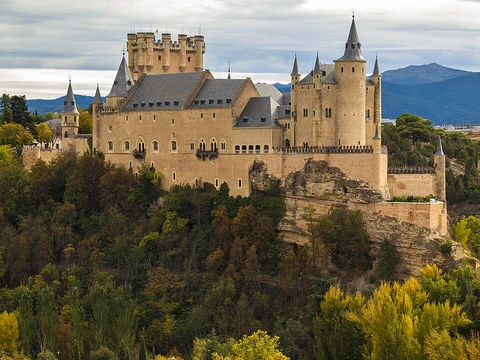
Edinburgh Castle
Historic castle on Castle Rock, site of 26 recorded sieges.

via Wikipedia: Edinburgh Castle · see source
Edinburgh Castle is a historic castle in Edinburgh, Scotland, standing on Castle Rock, which has been occupied by humans since at least the Iron Age. It has played a prominent role in Scottish history, serving as a royal residence, military fortress, prison, treasury, and home of the Honours of Scotland. As one of the most important strongholds in the Kingdom of Scotland, it was involved in many conflicts from the Wars of Scottish Independence in the 14th century to the Jacobite rising of 1745. Research undertaken in 2014 identified 26 sieges in its 1,100-year history, giving it a claim to having been 'the most besieged place in Great Britain and one of the most attacked in the world'.
- oldest_building
- St Margaret's Chapel (early 12th century) — the oldest surviving building in Edi
Lore & Background
The castle stands upon the plug of an extinct volcano that rose about 350 million years ago during the lower Carboniferous period. The summit is 130 metres above sea level, with rocky cliffs to the south, west, and north rising to 80 metres, making the only readily accessible route to the east. The geology of the rock presents difficulties for water supply; a 34-metre deep well often ran dry during drought or siege, including during the Lang Siege of 1573. Archaeological excavation in the early 1990s uncovered evidence of settlement during the late Bronze Age or early Iron Age, potentially making Castle Rock the longest continuously occupied site in Scotland, though the extent of finds was not significant enough for certain conclusions. The 1990s dig also revealed signs of habitation from the 1st and 2nd centuries AD, with Roman material including pottery, bronzes and brooches, implying a possible trading relationship between the Votadini and the Romans. The earliest known name for the Castle Rock may be 'Alauna', meaning 'rock place', from Ptolemy's 2nd-century map, though this could refer to another hill fort.
Reader's Guide
Edinburgh Castle's significance lies in its long and varied role in Scottish history. It served as a royal residence from the reign of Malcolm III in the 11th century until 1633, then principally as a military garrison from the 17th century. Its importance as national heritage was increasingly recognised from the early 19th century, with restoration programmes from the middle of the 19th century. The castle has been an arsenal, treasury, national archive, mint, prison, and military fortress. Few present buildings pre-date the Lang Siege of 1573, when medieval defences were largely destroyed by artillery bombardment; notable exceptions are St Margaret's Chapel from the early 12th century, which is regarded as the oldest building in Edinburgh, the Royal Palace, and the early 16th-century Great Hall. The castle is the site of the Scottish National War Memorial and the National War Museum. The British Army retains a largely ceremonial and administrative presence, and the castle is the regimental headquarters of the Royal Regiment of Scotland and the Royal Scots Dragoon Guards. It is Scotland's second most visited tourist attraction, with 2,044,963 visitors in 2025 and over 70 percent of leisure visitors to Edinburgh visiting the castle, and serves as the backdrop to the Royal Edinburgh Military Tattoo during the annual Edinburgh Festival.
Did You Know?
- The Castle Rock is the plug of an extinct volcano that erupted about 350 million years ago during the lower Carboniferous period.
- A 34-metre deep well was sunk in the Upper Ward, but it often ran dry during drought or siege, including during the Lang Siege of 1573.
- Research in 2014 identified 26 sieges in the castle's 1,100-year history, making it 'the most besieged place in Great Britain'.
- St Margaret's Chapel, from the early 12th century, is regarded as the oldest building in Edinburgh.
- The castle attracted 2,044,963 visitors in 2025, making it Scotland's second most visited tourist attraction.
A Volcanic Throne – Geology as Fortress
The Castle Rock is not merely a hill; it is the surviving plug of a volcano that erupted roughly 350 million years ago during the lower Carboniferous period. That ancient molten column punched through surrounding sedimentary layers and cooled into dolerite, an extraordinarily hard form of basalt. When glaciers later scoured the landscape, the softer rock to the east was stripped away while the dolerite core resisted, producing a dramatic crag-and-tail shape. The summit sits 130 metres above sea level, with sheer cliffs of up to 80 metres on three sides, leaving only the gentler eastern ridge as a practical approach. This made the site a natural fortress long before any human hand raised a wall. Yet the same geology that granted defence also created a vulnerability: basalt is nearly impermeable, so drawing water proved agonising. Even a 34-metre-deep well could not keep the Upper Ward supplied through drought or siege, a problem that bit hard during the Lang Siege of 1573.
The Most Besieged Rock – A Record of Conflict
Research completed in 2014 catalogued 26 distinct sieges across the castle's roughly 1,100-year history, earning it the claim of being 'the most besieged place in Great Britain and one of the most attacked in the world'. That tally spans an extraordinary sweep of conflict, from the Wars of Scottish Independence in the 14th century through to the Jacobite rising of 1745. The castle was not a passive witness; it was a central actor in each of those struggles. The physical scars of that history are visible in the built fabric: few of the structures standing today pre-date the Lang Siege of 1573, when sustained artillery bombardment largely obliterated the medieval defences. The survivors are few and precious. St Margaret's Chapel, dating to the early 12th century, is regarded as the oldest building in all of Edinburgh. The Royal Palace and the early 16th-century Great Hall also endure, but they are exceptions rather than the rule. Every other wall, every remaining curtain, is a later reconstruction layered over a site that had already been shattered.
A Castle of Many Roles – From Throne Room to Treasury
No single function defines Edinburgh Castle. From the reign of Malcolm III in the 11th century, the rock housed a royal residence, a role it maintained until 1633. Yet even as the crown's domestic interest waned from the 15th century onward, the castle never fell idle. It became, in succession or in combination, an arsenal, a treasury, a national archive, a mint, a prison, and a military garrison. By the 17th century, its residential purpose had largely given way to garrison duties. It also became the permanent home of the Honours of Scotland, the nation's regalia, a custodianship that underscores its symbolic weight. The British Army retains responsibility for certain areas to this day, though its role is now predominantly ceremonial and administrative. The castle serves as regimental headquarters for the Royal Regiment of Scotland and the Royal Scots Dragoon Guards, and it houses their regimental museums alongside that of the Royal Scots. In short, the castle has been a working institution for over a millennium, its purposes shifting with the needs of the state.
Scotland's Living Symbol – Heritage, Tourism, and Identity
From the early 19th century, recognition of the castle's place in Scotland's national heritage grew steadily, and restoration programmes have been carried out continuously since the middle of that century. Today, under the stewardship of Historic Environment Scotland, the castle stands as the country's second most visited tourist attraction, drawing 2,044,963 visitors in 2025 alone. More than 70 percent of all leisure visitors to Edinburgh make the climb to the rock, a figure that speaks to its gravitational pull on the city's cultural life. The castle also anchors the annual Edinburgh Festival as the dramatic backdrop to the Royal Edinburgh Military Tattoo, an event that projects the castle's silhouette to audiences around the globe. It is the site of the Scottish National War Memorial and the National War Museum, tying its martial past to a broader remembrance. For many, the image of those cliffs and ramparts is not simply a landmark but a shorthand for Scotland itself.
Common Misconceptions (Editorial)
One common misconception is that the castle was built on a typical hill, when in fact it stands on the plug of an extinct volcano that erupted about 350 million years ago. Another is that a deep well guaranteed a reliable water supply, but the 34-metre deep well often ran dry during drought or siege, including during the Lang Siege of 1573. Some may also believe the site’s continuous habitation is definitively proven, but archaeological evidence from the 1990s was not significant enough for certain conclusions about occupation from the late Bronze Age or early Iron Age.
Why It Matters (Editorial)
Edinburgh Castle endures not only as a physical landmark but as a living archive of more than a millennium of Scottish history, from Iron Age settlement through royal drama, war, and imprisonment to its modern role as a top tourist attraction. Its 26 sieges and continuous occupation remind us that the story of a place can be as turbulent and layered as the geology beneath it, making it a powerful symbol of resilience and national identity.
Frequently Asked Questions
What is Edinburgh Castle?
Edinburgh Castle is a historic fortress perched atop Castle Rock in Edinburgh, Scotland, a site humans have occupied since at least the Iron Age. Over the centuries it has functioned as a royal residence, military stronghold, prison, treasury, and home to the Honours of Scotland.
What role does Edinburgh Castle play in Scottish history?
The castle served as one of the Kingdom of Scotland's most critical strongholds, featuring in major conflicts from the Wars of Scottish Independence through the Jacobite rising of 1745. Its strategic position on Castle Rock made it a repeatedly targeted but fiercely defended seat of royal and military power.
How many sieges has Edinburgh Castle survived?
The castle has endured numerous sieges throughout its recorded history as a royal fortress, though the precise count is still debated among historians. Its steep volcanic rock base made it exceptionally difficult to capture, which is why so many attempts were made over the centuries.
Why is Edinburgh Castle important?
It is widely regarded as one of the most significant strongholds in Scottish history, having served multiple vital roles from royal dwelling to military defense. Its continuous human occupation since the Iron Age and its involvement in pivotal national conflicts make it a cornerstone of Scottish identity.
What is the oldest building in Edinburgh Castle?
St Margaret's Chapel, dating to the early 12th century, is the oldest surviving structure within the castle and in the entire city of Edinburgh. It sits among the castle's walls and represents the earliest known building on the Castle Rock site.
More in Castles 1-22
Spotted an error? Know more?
This is a living reference — every entry is fact-audited, and reader corrections feed straight into our audit queue. Suggest an edit · See this site's audit record