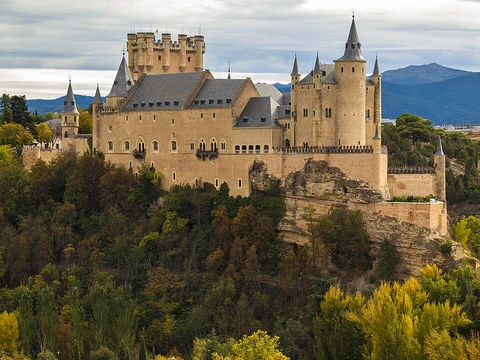
Caernarfon Castle
Medieval fortress and administrative centre of north Wales.

via Wikipedia: Caernarfon Castle · see source
Caernarfon Castle is a medieval fortress in Gwynedd, north-west Wales. The first fortification on the site was a motte-and-bailey castle built in the late 11th century, which King Edward I of England began to replace with the current stone structure in 1283. The castle and town established by Edward acted as the administrative centre of north Wales, and as a result the defences were built on a grand scale, with walls reminiscent of the Walls of Constantinople.
- Location
- Gwynedd, north-west Wales
- Construction started
- 1283
- Builder
- King Edward I of England
- Architect
- Probably James of Saint George
- World Heritage Site
- Part of 'Castles and Town Walls of King Edward in Gwynedd'
- Managed by
- Cadw, the Welsh Government's historic environment service
Lore & Background
The first fortification on the site was a motte-and-bailey castle built in the late 11th century. The Welsh recaptured Gwynedd in 1115, and Caernarfon Castle came into the possession of the Welsh princes, with Llywelyn the Great and later Llywelyn ap Gruffudd occasionally staying there. War broke out again between England and Wales on 22 March 1282, and after the death of Llywelyn ap Gruffudd and the capture of Dolbadarn Castle in May 1283, Edward I began building castles at Harlech and Caernarfon. The master mason responsible for the design and construction was probably James of Saint George. According to the Flores Historiarum, during construction the body of the Roman emperor Magnus Maximus was discovered, and Edward I ordered its reburial in a local church. While the castle was under construction, town walls were built around Caernarfon. The work cost between £20,000 and £25,000 from the start until the work ended in 1330. In 1294 the town and castle were sacked and captured by Madog ap Llywelyn during his rebellion against the English, but were recaptured the following year. The castle was unsuccessfully besieged during the Glyndŵr Rising of 1400–1415. When the Tudor dynasty ascended to the English throne in 1485, tensions between the Welsh and English began to diminish and castles were considered less important, so Caernarfon Castle was allowed to fall into a state of disrepair. Despite its dilapidated condition, during the English Civil War Caernarfon Castle was held by Royalists and besieged three times by Parliamentarian forces. This was the last time the castle was used in war. The castle was neglected until the 19th century when the state funded repairs. The castle was used for the investiture of the Prince of Wales in 1911 and again in 1969.
Reader's Guide
Caernarfon Castle is significant as a symbol of English rule in Wales and as the administrative centre of north Wales after the Edwardian conquest. Its construction, along with those at Conwy and Harlech, helped establish English control. The castle's design deliberately linked it to Caernarfon's Roman past, with walls reminiscent of the Walls of Constantinople. Although the castle appears mostly complete from the outside, the interior buildings no longer survive and many parts of the structure were never finished. The castle was used for the investiture of the Prince of Wales in 1911 and 1969, continuing a tradition that, according to legend, began with Edward II. Today it is managed by Cadw and is part of the World Heritage Site 'Castles and Town Walls of King Edward in Gwynedd'.
Did You Know?
- The castle's walls were deliberately designed to resemble the Walls of Constantinople.
- According to the Flores Historiarum, the body of Roman emperor Magnus Maximus was discovered during construction and reburied in a local church.
- The total cost of building the castle and town walls from start to 1330 was between £20,000 and £25,000.
- In 1294, Madog ap Llywelyn's forces sacked and captured both the town and castle, but they were recaptured the following year.
- The castle was used for the investiture of the Prince of Wales in 1911 and again in 1969.
Roman Roots and the Norman Frontier
The story of Caernarfon begins long before Edward I's stone walls. The Romans established a fort called Segontium near the River Seiont, chosen for its sheltered position and river access for resupply. The very name Caernarfon derives from these Roman defences—Welsh speakers called the place y gaer yn Arfon, meaning the stronghold in the land facing Anglesey. After the Romans withdrew in the early 5th century, little is known about what became of the fort and its civilian settlement. Centuries later, following the Norman Conquest, Hugh d'Avranches, Earl of Chester, reasserted Norman control over north Wales by raising three castles, one of them at Caernarfon. This early structure was a motte-and-bailey on a peninsula bounded by the River Seiont and the Menai Strait, defended by timber palisades and earthworks. The Welsh princes recaptured Gwynedd in 1115, and the castle passed into Welsh hands. Both Llywelyn the Great and Llywelyn ap Gruffudd are known to have stayed there, as recorded in documents produced at the castle itself.
Edward I's Monumental Vision
In 1283, after defeating the last Welsh resistance, Edward I launched an ambitious programme to transform Caernarfon into a statement of English dominance. The master mason behind the design was likely James of Saint George, a seasoned military engineer who shaped several of the Edwardian castles. The construction was deliberately theatrical: the castle's walls echoed the famous Walls of Constantinople, and the proximity of the Roman fort Segontium reinforced a narrative of ancient, imperial authority. The project was enormous in scope—town walls were built to connect with the castle, a new quay was constructed, and a ditch was dug as early as June 1283 to separate the castle site from the town. Timber was shipped from Liverpool, stone quarried from Anglesey and local sources, and hundreds of labourers excavated the moat and foundations. Houses were cleared to make room, and residents did not receive compensation for three years. Edward and his queen Eleanor of Castile arrived in July 1283 and stayed over a month, living in temporary timber apartments while the permanent structure rose around them. The total cost of the castle and town works, which continued until 1330, fell between £20,000 and £25,000.
A Fortress Through Rebellions and Civil War
Caernarfon Castle's defences were tested repeatedly. In 1294, Madog ap Llywelyn led a Welsh rebellion that saw the town and castle sacked and captured, though English forces recaptured them the following year. Nearly a century later, during the Glyndŵr Rising of 1400 to 1415, the castle withstood a siege but was never taken. When the Tudor dynasty took the English throne in 1485, the political tension between Wales and England eased, and military fortifications lost their strategic urgency. Caernarfon was left to deteriorate. Yet even in a state of disrepair, the castle saw action during the English Civil War, when Royalist garrisons held it against three separate Parliamentarian sieges. This was the final time the castle was used in warfare. The castle's interior buildings no longer survive, and many parts of the structure were never completed, yet the exterior presents a largely finished appearance.
From Neglect to National Symbol
After its last military use in the Civil War, Caernarfon Castle languished in neglect until the 19th century, when the state funded significant repairs to stabilise the structure. The castle then found a new ceremonial purpose: it was the venue for the investiture of the Prince of Wales in 1911 and again in 1969. Today, the castle is managed by Cadw, the Welsh Government's historic environment service, and forms part of the World Heritage Site designated as Castles and Town Walls of King Edward in Gwynedd. This designation recognises not just the castle itself but the broader programme of Edwardian fortification that reshaped north Wales.
Common Misconceptions (Editorial)
Some believe Caernarfon Castle was built entirely in the late 11th century, but the first structure was a motte-and-bailey castle from that period, while the current stone castle was begun by Edward I in 1283. Others assume the castle was continuously occupied and maintained, but after the Tudor dynasty ascended in 1485 it was allowed to fall into disrepair and was not used in war after the English Civil War.
Why It Matters (Editorial)
Caernarfon Castle endures as a symbol of both medieval English conquest and Welsh resistance, its grand walls echoing the imperial ambition of Constantinople. Its continued use for royal investitures, from 1911 to 1969, shows how a fortress built to dominate has been repurposed as a stage for national and ceremonial identity in modern Britain.
Frequently Asked Questions
Who is Caernarfon Castle?
Caernarfon Castle is a medieval stone fortress situated in Gwynedd, north-west Wales. King Edward I of England ordered its construction in 1283 to replace an older motte-and-bailey fortification that had occupied the site since the late 11th century.
What is Caernarfon Castle's role?
It functioned as the administrative headquarters for governing north Wales, which explains why Edward I commissioned such a grand and imposing defensive structure. The castle's walls were deliberately styled to recall the ancient Walls of Constantinople, projecting an image of imperial authority.
How does Caernarfon Castle's story end?
The castle no longer serves a military or governmental purpose but endures as a preserved historic monument. It is now cared for by Cadw, the Welsh Government's heritage service, and is included in the UNESCO World Heritage Site covering Edward I's castles and town walls in Gwynedd.
Why is Caernarfon Castle important?
It is the largest and most architecturally ambitious of all the fortresses Edward I raised in Wales, embodying the political message of English sovereignty over the region. Its designation as part of a UNESCO World Heritage Site cements its standing as a landmark of medieval military architecture and Welsh history.
Who designed Caernarfon Castle?
The master architect is generally identified as James of Saint George, though this attribution rests on probability rather than a single definitive document. He oversaw the transformation of the earlier wooden fort into the massive polygonal stone complex beginning in 1283.
More in Castles 1-22
Spotted an error? Know more?
This is a living reference — every entry is fact-audited, and reader corrections feed straight into our audit queue. Suggest an edit · See this site's audit record