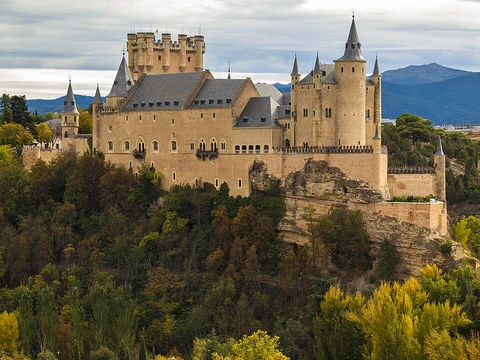
Chateau de Chenonceau
A Loire Valley château spanning the river Cher.

The Château de Chenonceau is a French château spanning the river Cher, near the small village of Chenonceaux, Indre-et-Loire, Centre-Val de Loire. It is one of the best-known châteaux of the Loire Valley and, other than the Royal Palace of Versailles, the most visited château in France.
- Location
- Near Chenonceaux, Indre-et-Loire, Centre-Val de Loire, France
- Architects
- Philibert de l'Orme (bridge); Jean Bullant (gallery)
- Architectural style
- Late Gothic and early Renaissance
Lore & Background
The fief of Chenonceau belonged to the Marques family in the 13th century.
Reader's Guide
The Château de Chenonceau is significant for its architectural blend of late Gothic and early Renaissance, its innovative bridge and gallery spanning the Cher, and its continuous occupation by notable historical figures. It served as a royal residence, a site of lavish parties under Catherine de' Medici, and a literary salon under Louise Dupin, hosting Enlightenment thinkers. During the French Revolution, Louise Dupin saved it from destruction by arguing it was essential as the only bridge across the river for many leagues. In the 20th century, it was used as a hospital in World War I and as an escape route during World War II. Today it remains a major tourist attraction, owned by the Menier family, and is designated a Monument historique.
Did You Know?
- During World War II, the château was used as a means of escaping from the Nazi-occupied zone to the 'free' zone on the opposite bank of the Cher.
- Jean-Jacques Rousseau worked on his book Émile while serving as secretary to Louise Dupin at Chenonceau.
Why It Matters (Editorial)
The Château de Chenonceau endures not only as a masterpiece of Late Gothic and early Renaissance architecture but as a living monument to human ingenuity and defiance. Its bridge-gallery, designed by Philibert de l'Orme and Jean Bullant, served as a literal lifeline during World War II, transforming a symbol of aristocratic grace into a vessel of survival. This fusion of beauty and purpose ensures Chenonceau remains more than a tourist destination—it is a story of resilience.
Frequently Asked Questions
Why is Chateau de Chenonceau important?
First mentioned in written sources as far back as the 11th century, the site represents centuries of continuous architectural development culminating in a Late Gothic and early Renaissance masterpiece. Its design of spanning a river is virtually unmatched among the châteaux of the Loire Valley.
More in Castles 1-22
Spotted an error? Know more?
This is a living reference — every entry is fact-audited, and reader corrections feed straight into our audit queue. Suggest an edit · See this site's audit record